

To understand how birds are faring, long-term monitoring of birds is essential. Setting up standardised surveys at specific locations that are repeated over time is an effective way of detecting changes in bird populations. ‘Wings on King’ is a dedicated long-term monitoring program on King Island that uses Birdata to collect, collate, and monitor birds. Birdata recently spoke with Kate Armstrong (also known as Kate Ravich), the powerhouse behind this amazing project to talk about the importance of King Island, citizen science, and how you can become involved.
The ‘Wings on King’ project was inspired by Kate Armstrong in 2014 after a wind farm development on King Island was proposed. During this time, Kate realised that there was very little data around the species of King Island, particularly the endemic species that are found nowhere else. With experience in ornithology and designing bird monitoring projects including the Birds in Backyards and Cowra Woodland Bird Project, Kate was well-equipped to initiate long-term monitoring on the island. The Birdata team supported Kate in setting up the project and almost 10 years later, the project is still going strong with hundreds of volunteers taking part in the monitoring over this time.
Whilst much of the success of this project is due to being well organised, science-based, and consistent, it is also the team’s determination and resilience. One of the challenges the team has faced is funding which is often difficult to find. Yet this has not deterred the team with the group running fundraisers, an art auction and even hosting a music festival to ensure their project can continue to thrive.
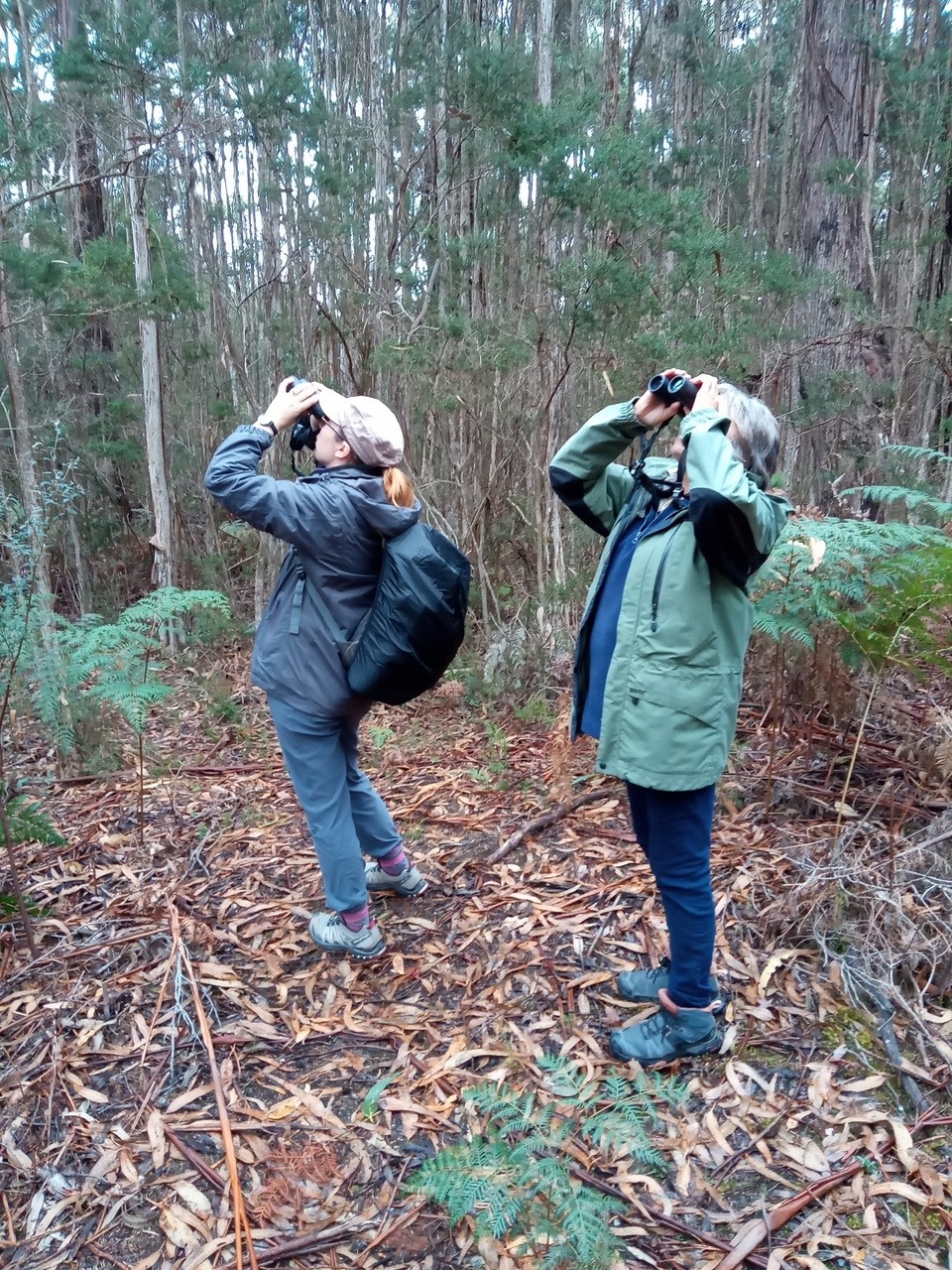
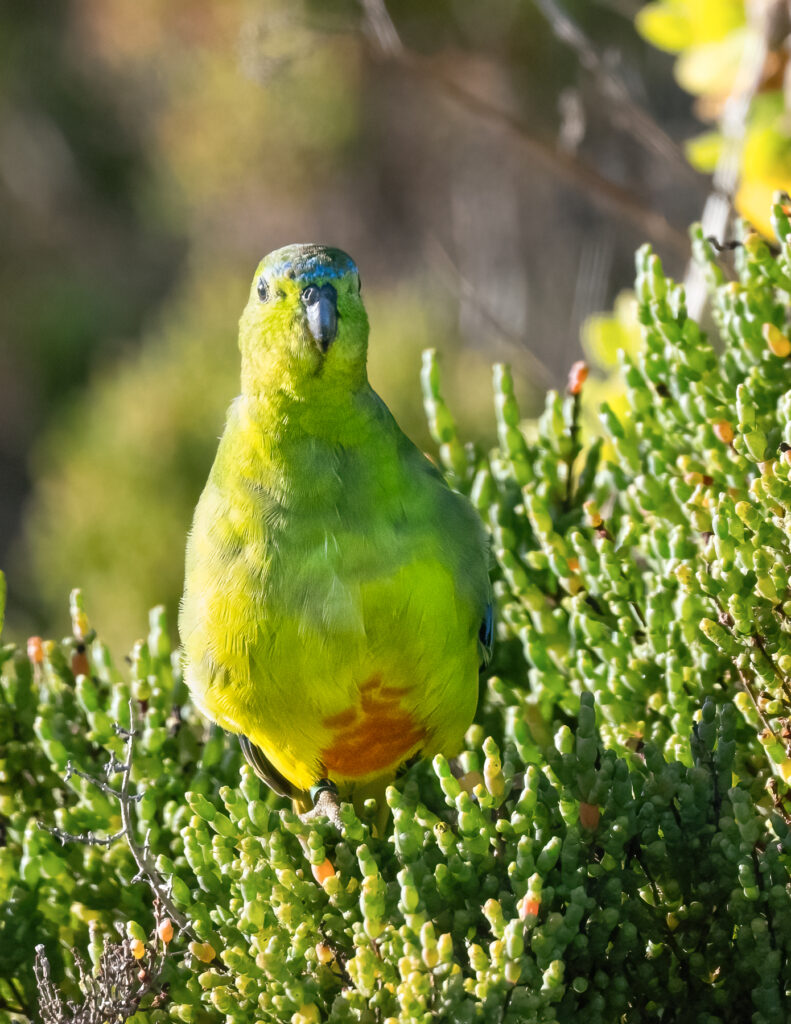
Image: Critically endangered Orange-bellied Parrot. A frequent visitor to King Island. Michael Hamel-Green
King Island’s unique species
King Island has a unique history in that it has been isolated for over 10,000 years since sea level rise created Bass Strait. Since then, many fauna and flora species have evolved into subspecies including 9 avian subspecies. Sitting in the middle of Bass Strait, the island is the southernmost breeding site for the Golden-headed Cisticola and the northernmost breeding site for 10 of the 12 Tasmanian endemic species, several of which are now King Island subspecies. Many Australian birds migrate around the country in response to food sources and weather, and as the Australian continent and Tasmania moved apart, species such as the Orange-bellied Parrot became migrants across Bass Strait. Today, King Island hosts many migrants including Orange-bellied Parrots and Swift parrots as well as migratory and resident shorebirds from Ruddy Turnstones to Hooded Plovers.
Whilst King Island has a history of extensive clearing coinciding with the arrival of Europeans in the early 1800s, with its low human population, many birds continue to thrive on the island. Yet there are still many threatened species with threats including land clearing, sea level rise, vehicles on the beach, and invasive species such as cats which have become the apex predator since Quolls became extinct on the island.
How are Wings on King Surveys conducted?
Wings on King is a project of the King Island Landcare group. Their management includes promotion of events, setting up teams ensuring each one has at least one experienced birder, managing the kits each team receives, welcoming and hosting the teams. Surveys occur twice a year: the last weekend of April (autumn) and 2nd weekend of November (spring) with approximately 20 volunteers per event. Initially the project had a small core of 3 locals and volunteers were mostly visitors to the island. Today though, thanks to the educational component of the project, 50% of the volunteers are local, ensuring monitoring is embedded within the community and the project sustainable.

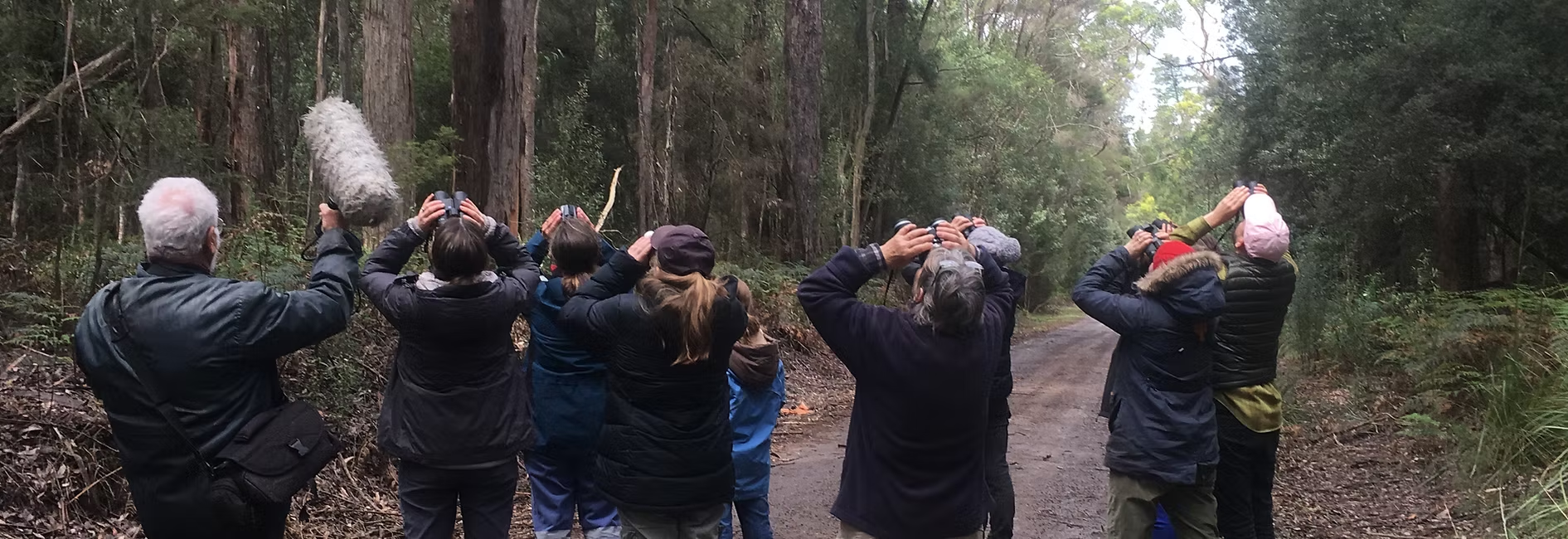
The group currently monitor 64 sites and use standardised surveys (either 2 ha, 20 min or 500m area searches) to ensure comparisons can be made over time. After the first 5 years of monitoring, data was analysed professionally and acts as base-line data for future analysis to be compared to with the next analysis due for 2027. This information will help to identify any potential changes in the species and in the case of declining species, ascertain what conservation measures might be needed. To support species recovery plans, the team will be adding more specific sites to monitor bird assemblages in areas that have been identified as potential habitat for critically endangered species.
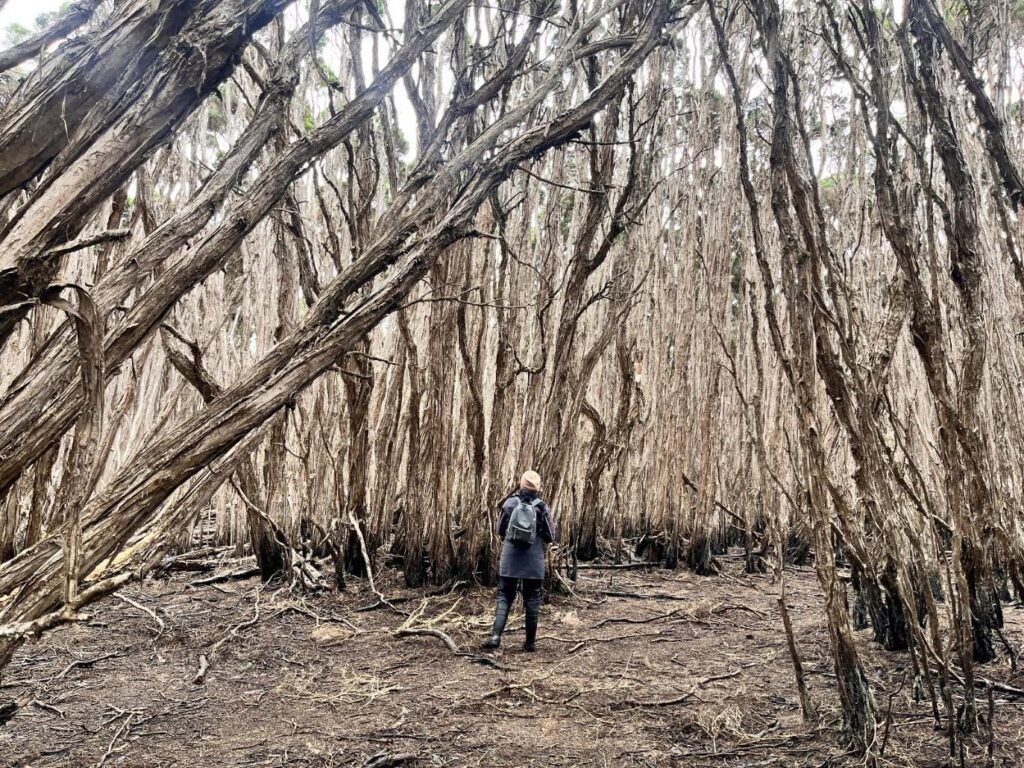
Image: One of the many diverse habitats of King Island that are surveyed by Wings on King.
“We only care about the things we love”
~ Kate Armstrong ~
What are the volunteer benefits of Wings on King?
Besides contributing to conservation, volunteers get access to private areas of the island, learn about birds (especially the endemics that are unique to the area), and find connection in the social gatherings associated with the event. The events run for entire weekends enabling visitors and locals alike to spend time together and learn from each other. Education is embedded in the project with teams being led by experienced birders. This enables new birders to participate and expand their skills whilst ensuring data accuracy.
What are the benefits of citizen science to conservation?
Kate believes that citizen science is essential to conservation, stating “there just aren’t enough ornithologists around to gather the data.” Kate also believes that “we only care about the things we love”. So, as volunteers learn more about the birds around them, they also foster a stronger sense of care.
How to participate in Wings on King
If you would like to participate in an upcoming survey for Wings on King, you can check out all the details here: Birds of King Island – Get Involved.
Image: Volunteers conducting a bird survey on King Island.
Want to be featured by Birdata?
If you or a group you are involved in use Birdata for your bird monitoring projects and would like to be featured, please reach out to the Birdata team at birdata@birdlife.org.au.