
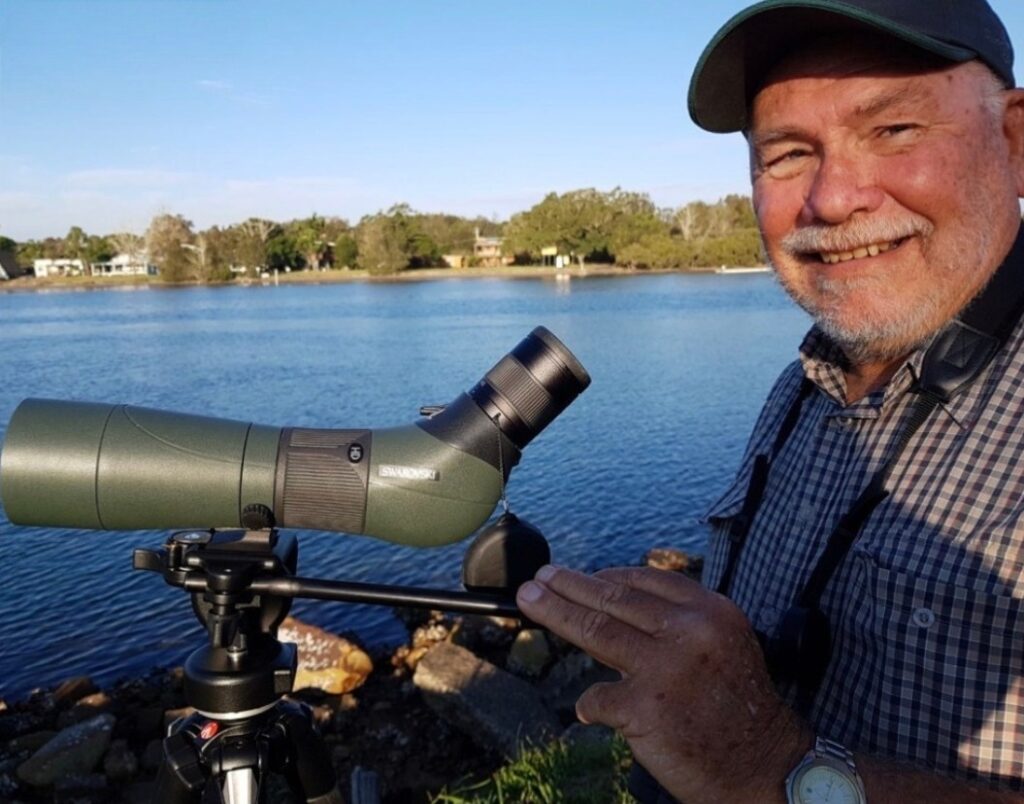
In late May this year, the birding world was made poorer by the loss of Alan Keith Morris, husband, father, friend, and bird mentor. Alan was often referred to as “Mr NSW” because of his intricate knowledge of birds in NSW, both past and present. But to many birders, Alan was known simply as “AKM”. Besides his incredible commitment and devotion to birds, Alan has also been described as a friend, father figure and mentor. Learn more about Alan’s birding legacy and hear from some of the birding community who were fortunate to call Alan a friend.
Alan's incredible Birdata Legacy
Alan’s list of birding and conservation achievements are long and diverse, yet one of these achievements includes over 25,000 Birdata surveys spanning over 5 decades. At Birdata, we talk a lot about the importance of long-term monitoring using standardised surveys. Alan Morris was a testament to this, entering a staggering 25,384 bird surveys into Birdata. This equates to a minimum of 22,000 hours of surveying dedicated to bird conservation just within Birdata alone! This is the highest number of surveys ever entered by an individual to Birdata and highlights Alan’s passion, dedication and belief in the importance of bird monitoring.
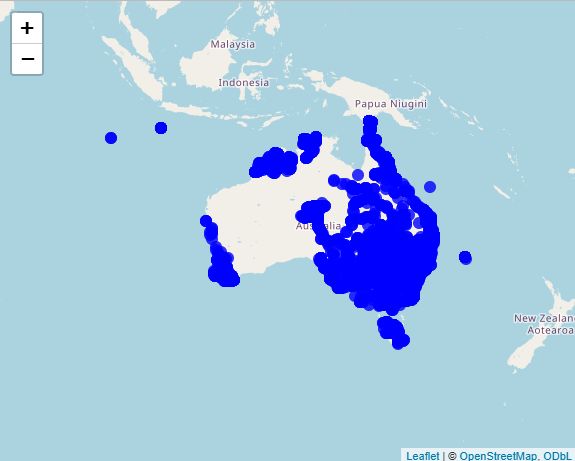
Even more remarkable is that over 85% of Alan’s Birdata surveys were standardised, meaning that his surveys were replicable and comparable to other standardised surveys enabling his data to contribute to various analyses including threatened species indices. For some sites, he conducted several hundred repeat surveys, creating a rich database of local bird knowledge over time. Alan also contributed many Incidental surveys, helping to build a more general picture of where species are found across the country. With over 7500 survey sites across Australia, Alan’s birding covered much of this wide and diverse continent giving him the well-deserved title by friend Mick Roderick, as the ‘Don Bradman of Atlassing’.
- Some of the BirdLife programs Alan contributed to include:
- Atlas Project
- General Birdata
- Birds in Backyards
- Aussie Bird Count participant and moderator
- Swift Parrot and Regent Honeyeater searches
- Bittern surveys
- WA Black Cockatoos
- Powerful Owl Project
Other birding and conservation achievements
In 2019, Alan was honoured with the Member of the Order of Australia award (AM) as part of the Queen’s Birthday Honours List due to his significant service to wildlife conservation, particularly native bird life. Whilst his achievements are too many to note, here are just some of Alan’s bird conservation achievements:
- Founder of the Munghorn Gap Nature Reserve banding project over 60 years ago.
- Huge contributor to seabird breeding islands data on NSW offshore islands in the 1970's.
- Involvement with the Lord Howe Woodhen Recovery Project.
- Life member of Birding NSW (founding the Central Coast chapter nearly 30 years ago).
- Moderator of NSW Birdline (unusual bird reporting website).
- Member of the Regent Honeyeater Recovery Team for almost 25 years.
- Founding member of the NSW Ornithological Records Appraisal Committee (ORAC).
- Coordinator for the NSW & ACT Twitchathon between 2004-2015.
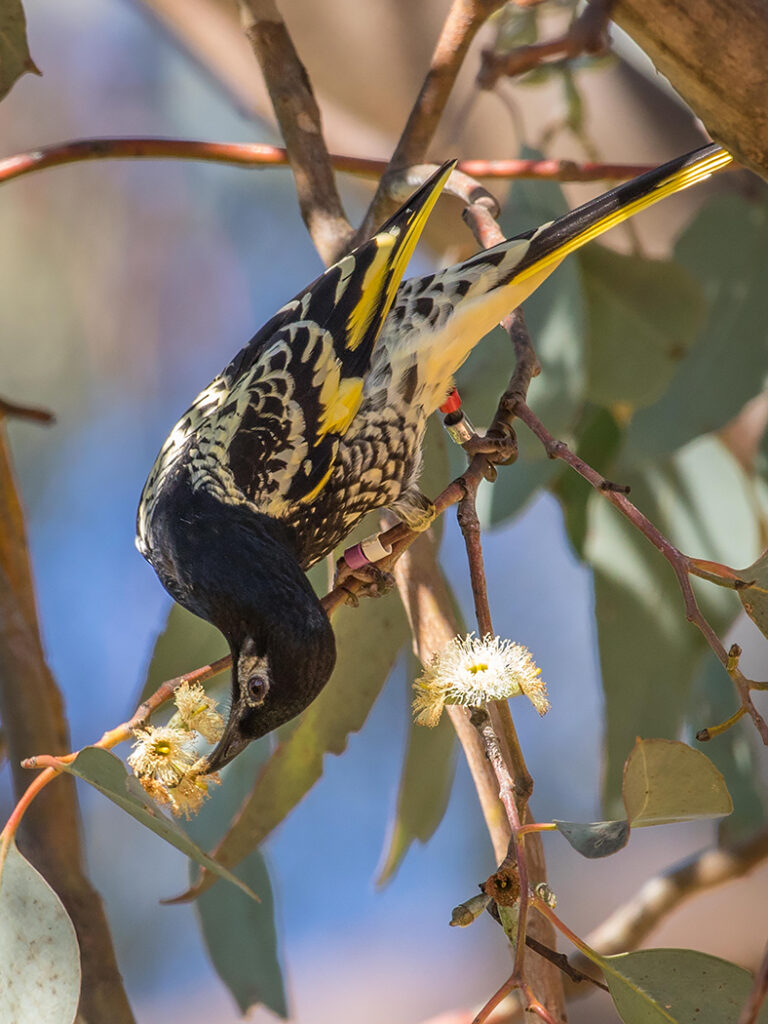
Image: Critically endangered Regent Honeyeater of which Alan played a vital role in protecting.
Alan as a birding mentor
One of the special qualities of Alan was his knowledge-sharing and mentoring. He not only instilled in people the importance of documenting bird records but the importance of sharing knowledge. Mick Roderick, BirdLife Australia’s Regent Honeyeater Recovery Advisor, shares his experience of Alan as a birding mentor.
What did Alan mean to you? And what role did he play in your life?
Alan quite simply was a ‘birding mentor’ to me. Before I first got to know him, people spoke about him as having encyclopaedic knowledge of NSW birds; not so much “ornithological encyclopaedic knowledge” as just remembering where he (and others!) had seen particular species at particular locations over many decades. He could even tell you who he was with when he saw these birds as well. This resonated with me and the fact that so many other people commented about it made me realise that it was also an important skill to have; particularly as many of our species continue to decline. In a sense, Alan had many of these declines in his head, though as we know, he certainly did not hoard any of this important knowledge in his mind – he was the most prolific data-gatherer and recordist around. All of these things have left an indelible mark on me and have played a huge part of me choosing bird conservation as a career, but also to share and excite other people about bird observations generally.
What will Alan be remembered for in the birding community?
I will remember Alan for his generosity, knowledge, and respect for birds. Alan had a high standard of ethics and a strong dedication to recording birds, counting and logging birds in a variety of databases for decades which is a precious and reliable resource. His legacy is well-documented and not just anecdotes or memories. He was also a teacher to many and dedicated to sharing his knowledge. He was a beautiful person and will be missed greatly.
How will you honour Alan’s legacy?
I hope to follow in Alan’s footsteps in terms of sharing knowledge and documenting as much as I can via atlassing or other means. Of course, I will also do everything I can to help recover many of the now-threatened species that Alan watched decline during his years of observing our wonderful bird life; especially the Regent Honeyeater. Also, the last time I saw Alan I did make a promise to him to keep the NSW Birdline going and knowing what that platform meant to him, I’m determined to do just that.
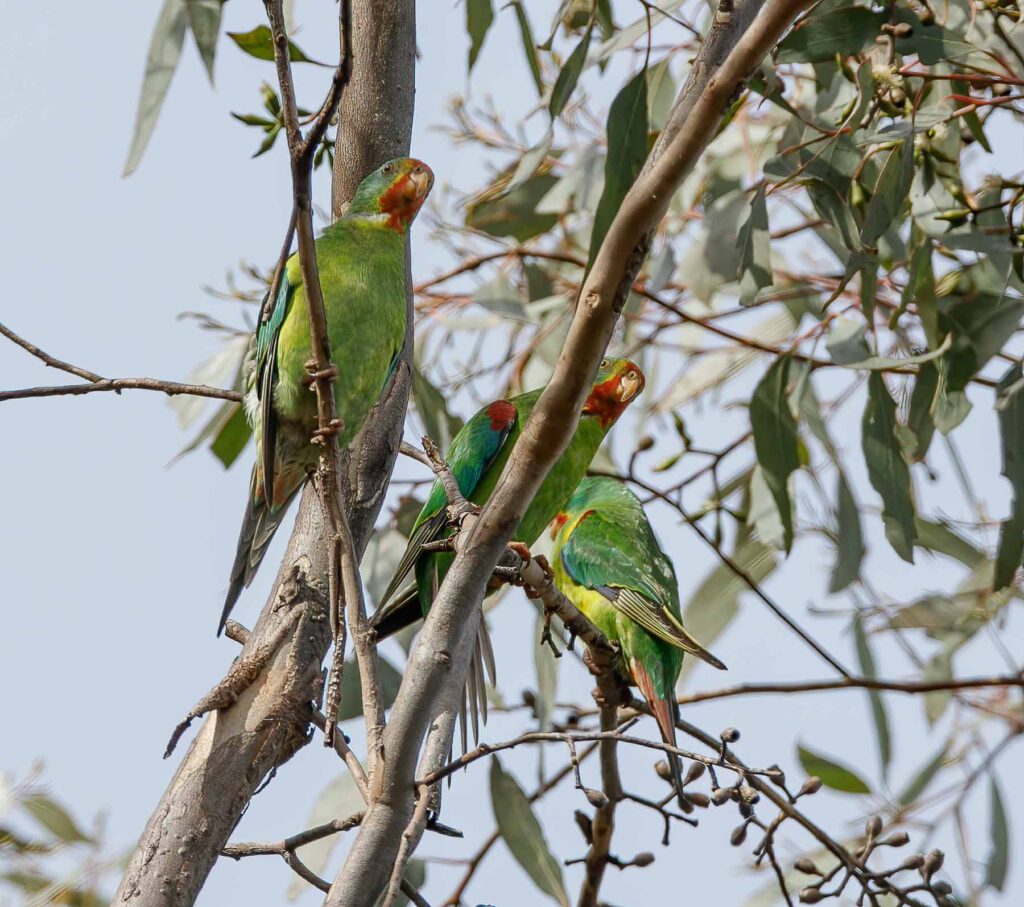
Image: Alan participated in many Swift Parrot searches for BirdLife Australia. Photo – Linda Leman.
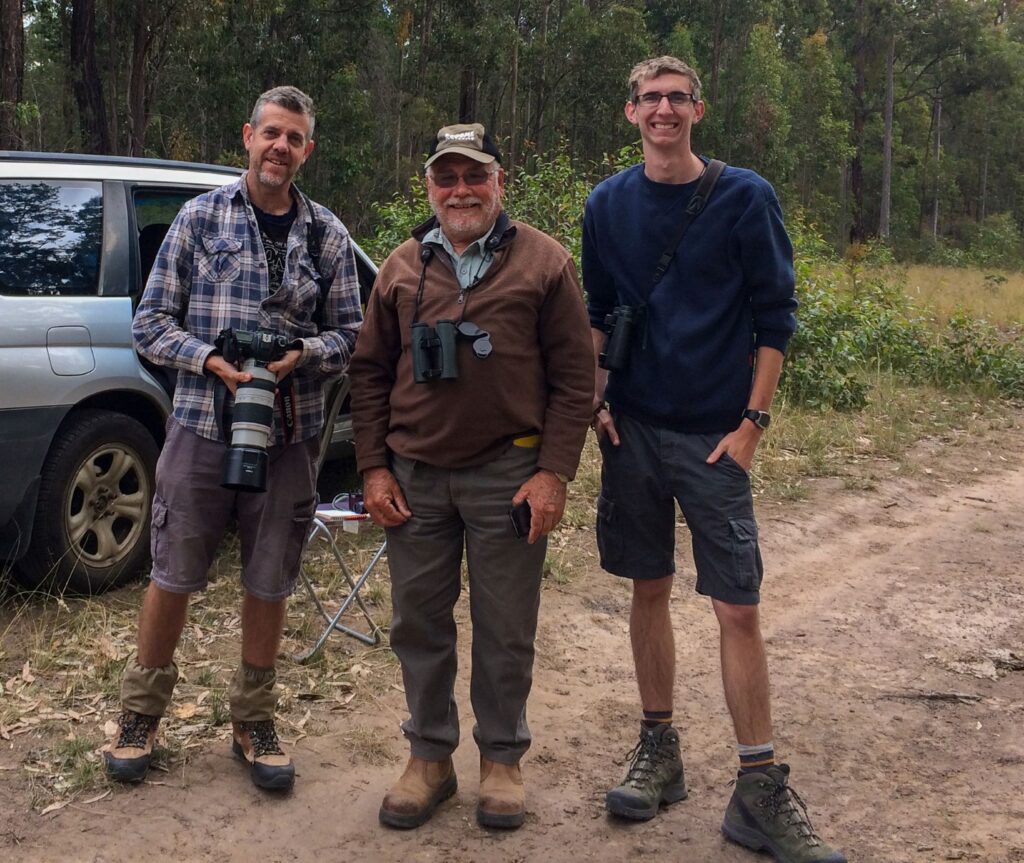
Image: [From left to right] Mick Roderick (Regent Honeyeater Recovery Advisor, BirdLife Australia), Alan Morris, and Alex Berryman (Senior Red List Officer with BirdLife International) after watching close to 20 Regent Honeyeaters at a special property in the Lower Hunter region that Alan helped make one of the most important private conservation areas for Regent Honeyeaters in NSW.
Alan as a birding friend
Prominent birder, Martin Cachard shares his story of Alan as a birding friend, father figure and for his young and sprightly energy that expanded well into his 80s.
When did you first meet Alan?
I first met Alan in Bateau Bay on the Central Coast of NSW in the 1990s however Alan had been someone on my radar for a long time, as a fellow birder I would like to meet. We soon became “birding mates” particularly exploring the Munmorah coastal reserve where we would go out together and share knowledge. During this period, not only did we share birding knowledge, but I also spent every Sunday at Alan and his wife Anne’s home for a Sunday roast. For me, Alan was like a father figure. When I moved to Cairns, Alan and I stayed in regular contact even as late as last year when he visited me in Cairns.
What is one of your most treasured moments with Alan?
One of the best memories I have of birding with Alan is in Georgetown with Steven Edwards counting a big flock of Cotton Pygmy-geese at Green Hills Station.
What will Alan be remembered for in the birding community?
I will remember Alan for his generosity, knowledge, and respect for birds. Alan had a high standard of ethics and a strong dedication to recording birds, counting and logging birds in a variety of databases for decades which is a precious and reliable resource. His legacy is well-documented and not just anecdotes or memories. He was also a teacher to many and dedicated to sharing his knowledge. He was a beautiful person and will be missed greatly.
Image: Martin Cachard and Alan Morris in Georgetown. Alan, as per usual can be seen with notepad in hand, documenting their discoveries.
On behalf of BirdLife Australia, the Birdata team would like to thank Alan for his outstanding contribution to Birdata and bird conservation. Alan is an inspiration to us all and his dedication to documenting birds and sharing knowledge is one we aspire to uphold. Our condolences go out to Alan’s family and friends and to all those who have been moved by Alan’s passing.
Want to be featured by Birdata?
If you or a group you are involved in use Birdata for your bird monitoring projects and would like to be featured, please reach out to the Birdata team at birdata@birdlife.org.au.