Complex seasonal interactions of birds across a widely diverse continent
Whilst Australian seasons are much more subtle than the northern hemisphere and many species do not conform to seasonal trends, as we shift into autumn, days start to get shorter and cooler, influencing bird behaviour and life cycles.
Two of the most energy-demanding events in a bird’s life are breeding and migration, and birds are generally under strong selection pressure to breed and migrate when the conditions are most favourable. Whilst these events often follow predictable seasonable patterns, ecological factors such as food availability often shift their timing.Yet not all birds conform to seasonal trends and being such a diverse continent, Australian birds can differ greatly in their response to autumn.
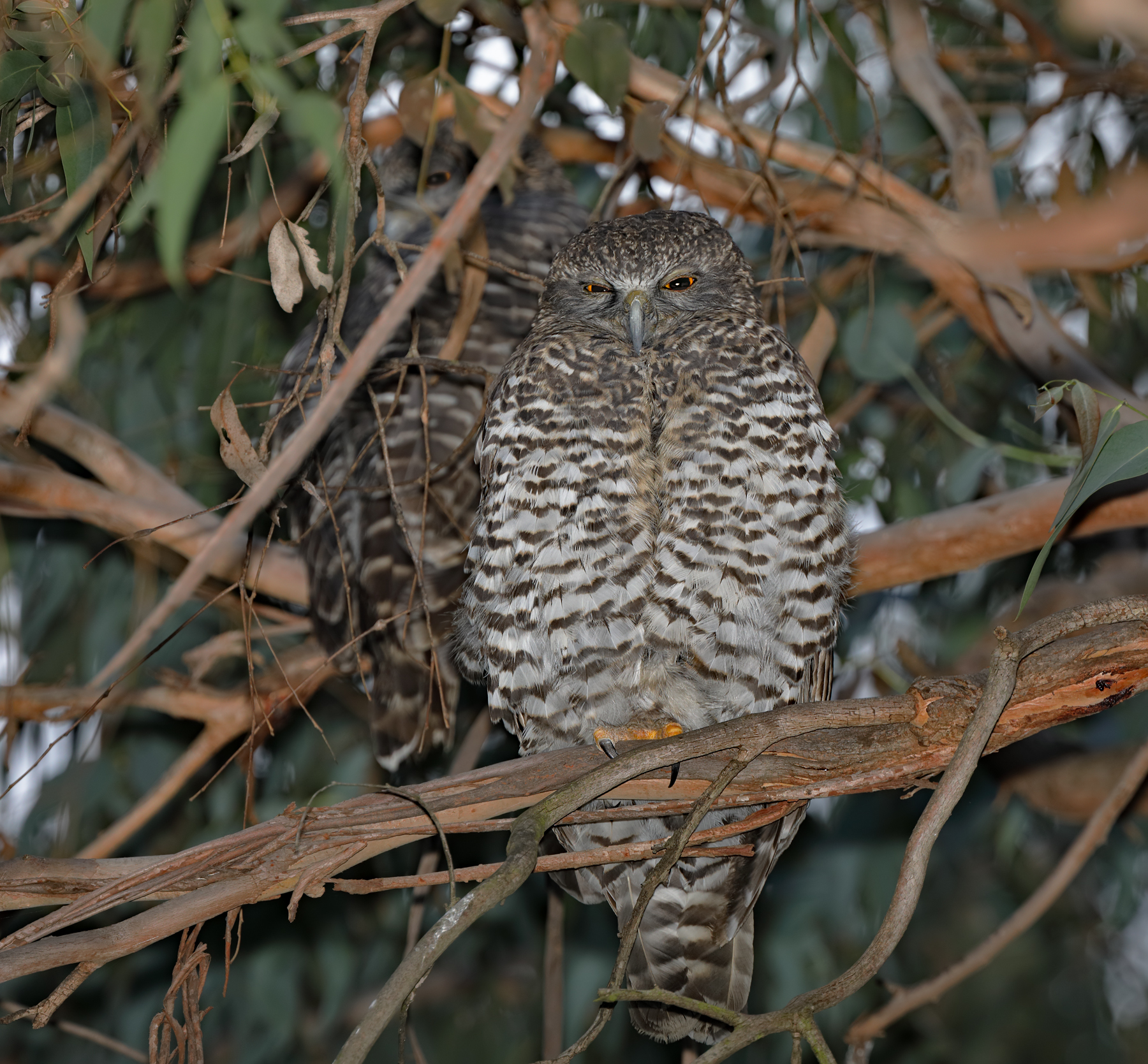
A pair of Powerful Owls who mate for life and breed in the austral autumn - Stephen Garth.
Australian seasons: complex ecological interactions
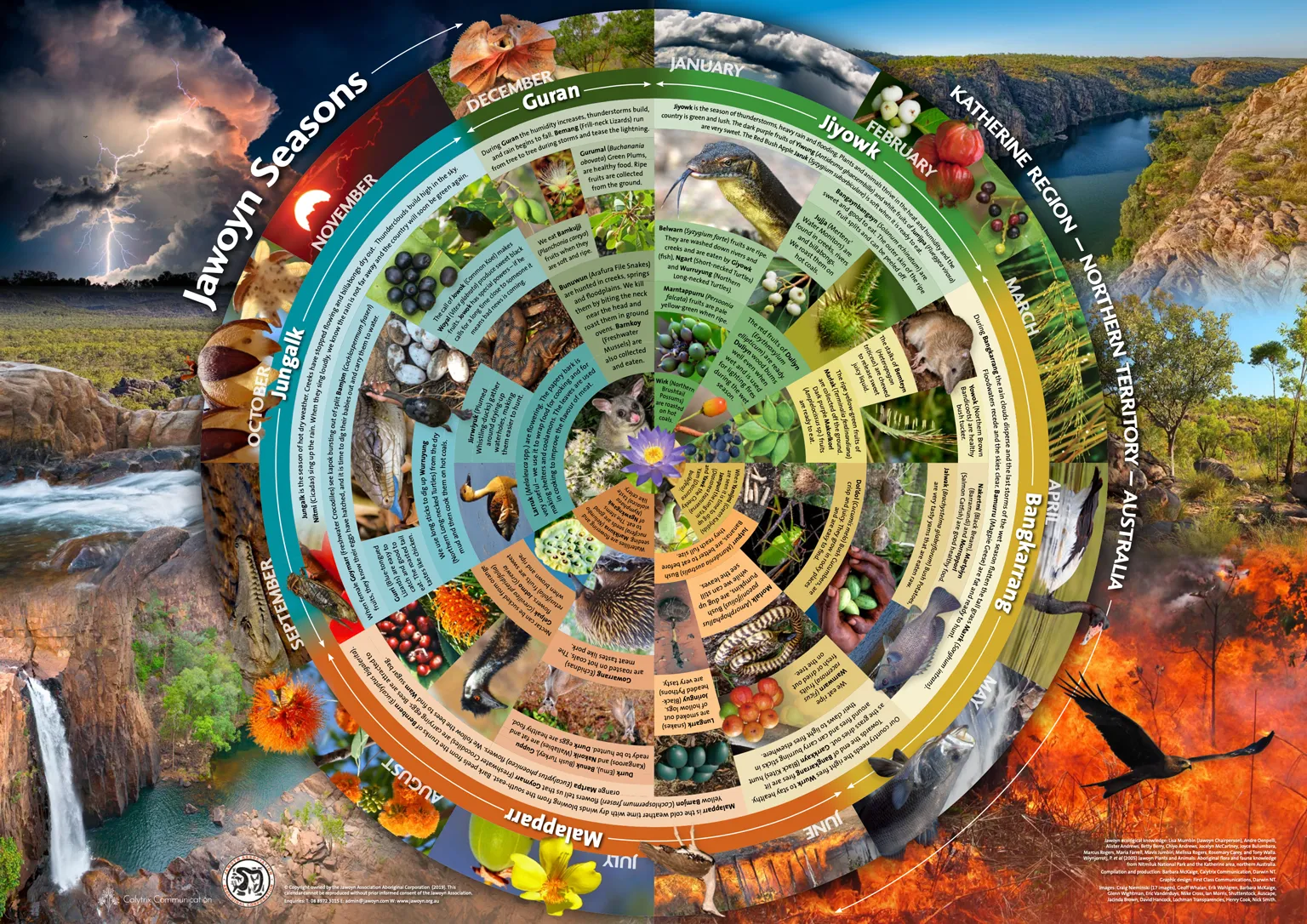
Seasonality across Australia is much less defined than other parts of the world. Whilst European colonisers tried to make the four northern hemisphere seasons fit southern Australia and a two season (Wet and Dry) in the north, Indigenous Australians identify between two and seven distinct seasons (even in the wet north). These seasons take into account transitions in the natural environment that influence the lives of Indigenous and Torres Strait Islander peoples.
Image: In the Katherine region, the Jawoyn calendar has 5 seasons defined by weather patterns, environmental conditions and cues from local fauna and flora. (BOM, 2026).
Just as Indigenous Australiansuse deep knowledge of the land to attuneto the seasonal variability of the Australian continent, birds have adapted with their own seasonal knowledge. Subsequently, we see a range of behaviours across the continent at this time of the year, as we move away from the hot dry summer (south) and hot wet summer (north). Some birds are getting ready to fly to breeding grounds in the far north after putting on weight over the spring and summer, others arrive to exploit the resources in the warm north Australian waters. Further still some birds disperse across the continent after their Spring breeding migration to the temperate woodlands of South-eastern Australia, or come down from the mountains after a summer in the alpine country.
Wherever you are it is a sound bet that you will be seeing changes in your bird community at this time of the year, with some species leaving and others arriving or just passing through on their way.
If this wasn’t complicated enough, there are some species settling into breeding as the temperature drops and conditions become more favourable for their specific needs.Here are a few examples of species that either initiate breeding or migration in autumn. With over 900 species living within or visiting Australia, we can’t focus on all species, however, if you are interested in learning about the specific movements and activities of birds in your local area, the HANZAB – Handbook of Australian, New Zealand and Antarctic Birds is a great resource and free for allBirdata users.Alternatively, look at some of the Indigenous seasonal calendarsto see what ecological interactions might occur in your area over the next few months.
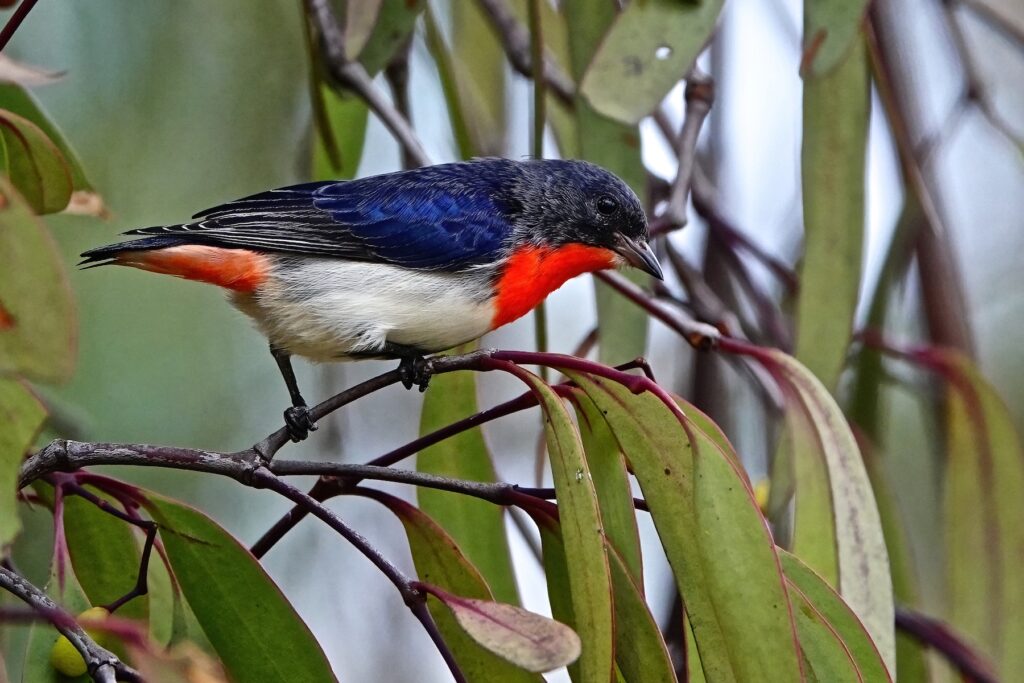
Image: In the Banbai calendar of Wattleridge, New South Wales, the Box Mistletoe starts to flower, attracting Mistletoe birds, a key indicator of the warm season of March and the closing of the hot, wildfire time. (BOM, 2026). Photo: Rodger Scott.
Breeding
Whilst spring and summer (Sept – Feb) are typically the prime seasons for breeding, there are some species where the autumn conditions are just right.
Powerful Owl
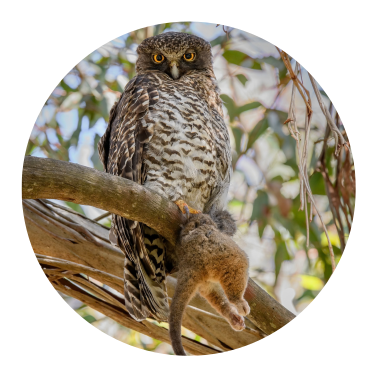
For the majestic Powerful Owl, the largest Australian owl,autumn triggers the start of the breeding season. Once eggs are laid in a tree hollow which the male has prepared, the female incubates the eggs whilst the male hunts for food – typically providing her with flying-foxes and possums. Powerful Owls can be found in Victoria and along the eastern coast to southeast Queensland. To support Powerful Owls over autumn, consider joining the Powerful Owl Project. By entering sightings, including any breeding notes, into the dedicated Birdata program you will be ensuring Powerful Owls are adequately monitored, and conservationistsunderstand the best ways to protect them.
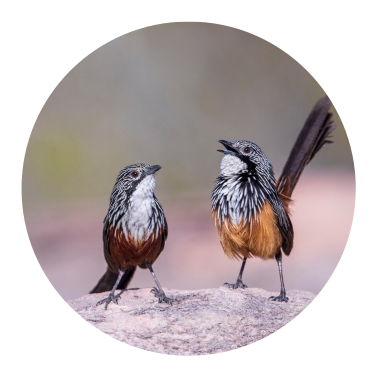
White-throated Grasswrens start their breeding in December in the northern wet tropics yet also breed in autumn up to as late as May/June.They make their nests out of spinifex grass, low to the ground, often concealed by Acacia tree species. Whilst much smaller than Powerful Owls, White-throated Grasswrens are the largest grasswrens in Australia. Unfortunately, as there are only estimated to be between 900-2000 individuals left in the wild within a restricted range of Kakadu National Park, White-throated Grasswrens are an endangered species.
Migration
Why do birds migrate?
One of the reasons birds migrate is because food sources in feeding grounds start to decline due to seasonal changes. Cooler weather in autumn can cause food sources such as plants and invertebrates (who may go into hibernation) to decrease, especially in snowy areas.
Migratory Shorebirds
Arriving in Autumn
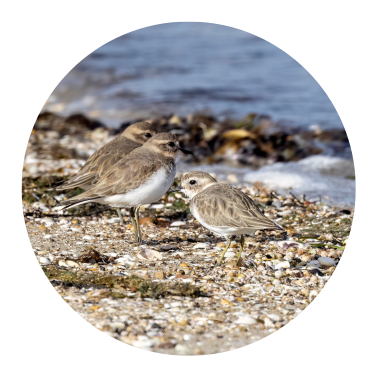
Double-banded Plover - Gary King. Autumn 2023, Tasmania.
Double-banded Plover
Whilst most migratory shorebirds take off in Autumn, the Double-banded Plover, arrives in Australia from March onwards, migrating from New Zealand. Spreading along the southern coastline of Australia, Tasmania and up as far as Queensland, Double-banded Plovers can be seen foraging in pastures and mudflats.
Hutton’s Shearwater
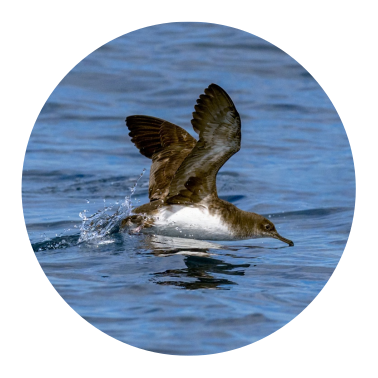
Similar to Double-banded Plovers, Hutton’s shearwaters also arrive from New Zealand but make an incredible journey west, with many of them ending up in the Kimberly coast of Western Australia. They will then plunge-dive into the warm waters to catch fish in their non-breeding season.
Hutton's Shearwater - Mark Lethlean. Captured migrating through the pelagic waters off the Mornington Peninsula, early March, 2023.
Taking flight in Autumn
Of the shorebird species that spend their non-breeding season in Australia, most of these birds take flight in autumn to travel to their northern hemisphere breeding sites along the East Asian–Australasian Flyway (EAAF). Some examples include:
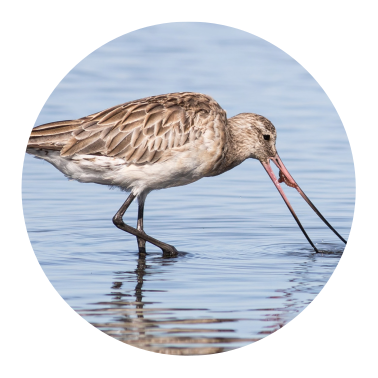
Bar-tailed Godwits – long haul fliers who migrate to their breeding grounds in Scandinavia, Siberia, Alaska, and northern Asia.
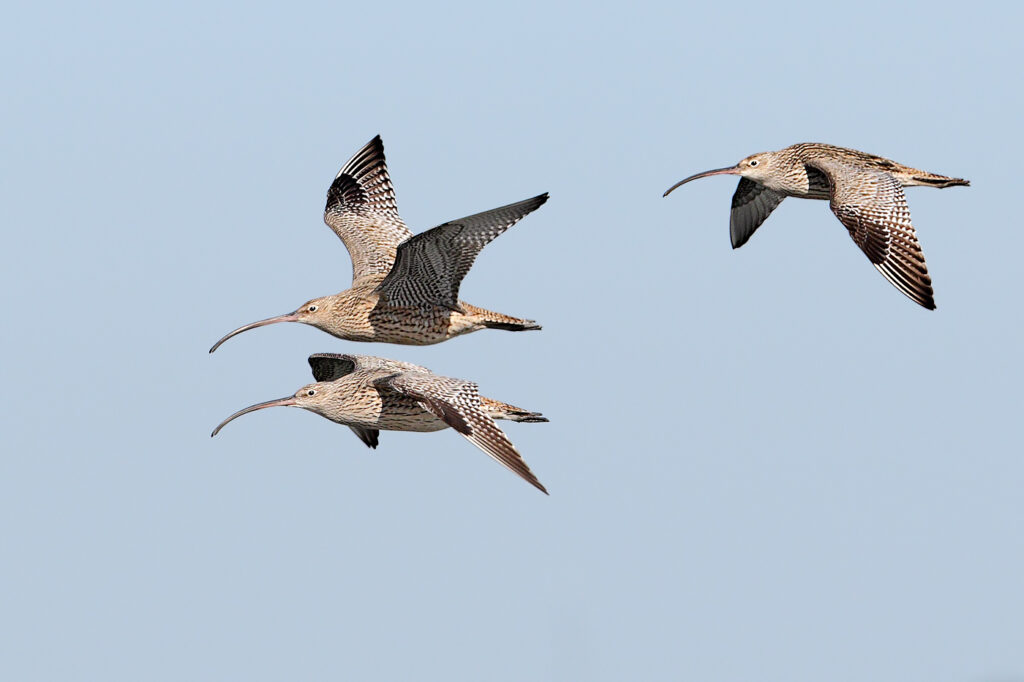
Far Eastern Curlews – the world's largest shorebird who migrates to their breeding grounds in China, Siberia, and Russia.
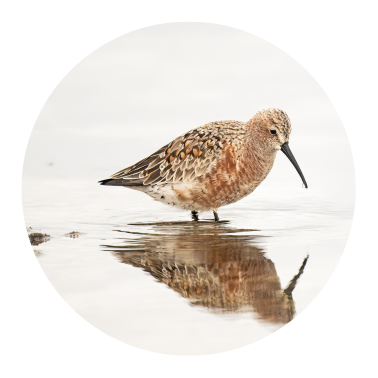
Curlew Sandpipers – historically one of the most common shorebirds, this declining threatened species migrates to their breeding grounds in Arctic Siberia.
Bar-tailed Godwit - Cherilyn Corker, end of summer, 2019, Mandurah, WA.
Far Eastern Curlews flying past Newcastle, NSW, in autumn 2015 - Jill Wilson.
Curlew sandpiper before migration to Siberia/Alaska in breeding colour and feeding in the shallows to prepare for flight. Flat Rock, Far North Coast NSW, autumn, 2023 - Peter Scholer.
Australian Species Migration
As Australia’s climate is a lot milder and has less severe winters, most Australian birds only migrate within Australia, and often no further than 1000km from their breeding territory. Across species though, there is much variation in migration patterns with some escaping the cooler climes by heading north, from mountain tops and into lowlands, from dry to wet climates, and others moving inland for essential resources.
Birds travelling North
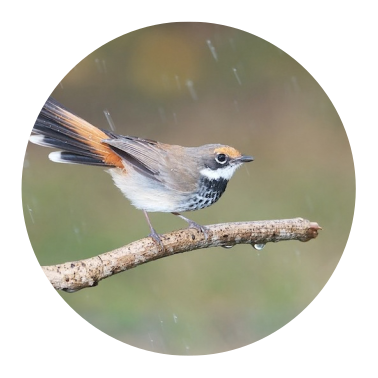
Rufous Fantails - head north from south-eastern Australia. Some stop in northern Queensland whilst others head all the way to Papua New Guinea!
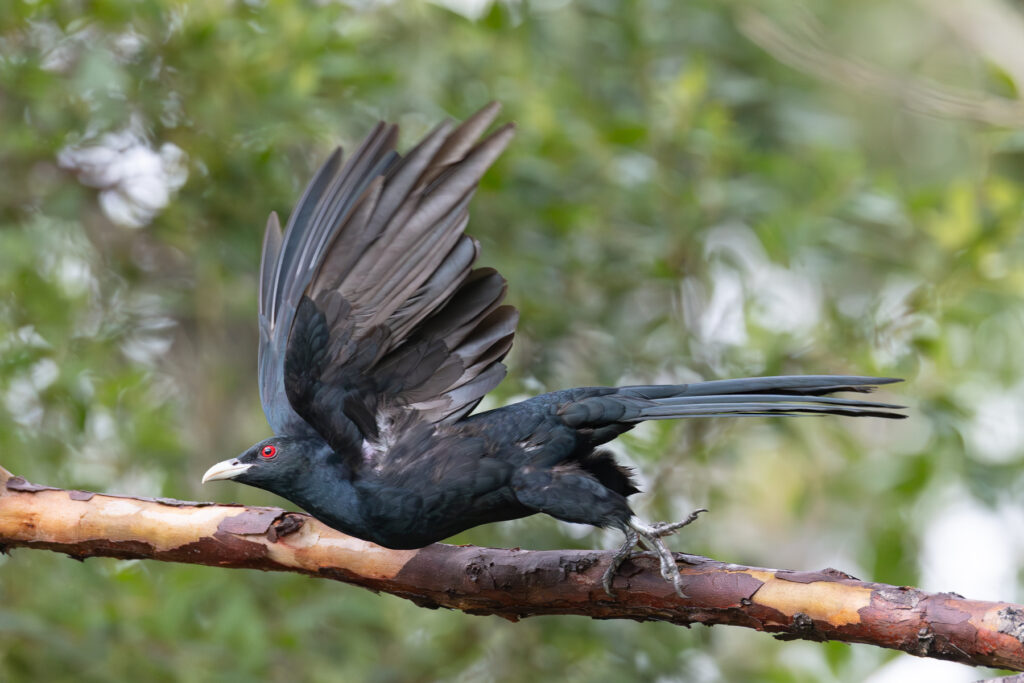
Eastern Koels - after breeding in Australia, Eastern Koels also make the long migration north to Papua New Guinea.
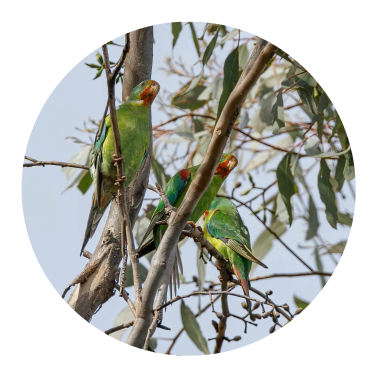
Swift Parrots - migrate in autumn from Tasmania post-breeding to make use of the food sources in Victoria and New South Wales during winter, even taking on the Bass Strait!
Rufous Fantail in the rain in Northern Queensland - Brian O'Leary.
Eastern Koel about to take flight in March, 2026, Noosaville - Angela Farnsworth.
Swift Parrots sighted in autumn 2021 in the Mt Annan Botanical Gardens, NSW - Linda Leman.
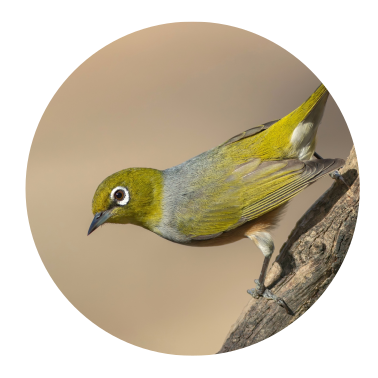
Australian Silvereyes - whilst some northern and western silvereyes stay in their home range, many South Australian, Victorian, and south-east NSW Silvereyes migrate north to northern NSW/Qld. Tasmanian Silvereyes remarkably cross the Bass Strait in autumn to land somewhere in southeastern Australia where other Silvereye populations have already left.
Silvereye seen in Victoria, March, 2024 with buff colouring, indicating it is the Tasmanian subspecies 'lateralis' which would have just crossed the Bass Strait - Rob Solic.
The Great Honeyeater Migration
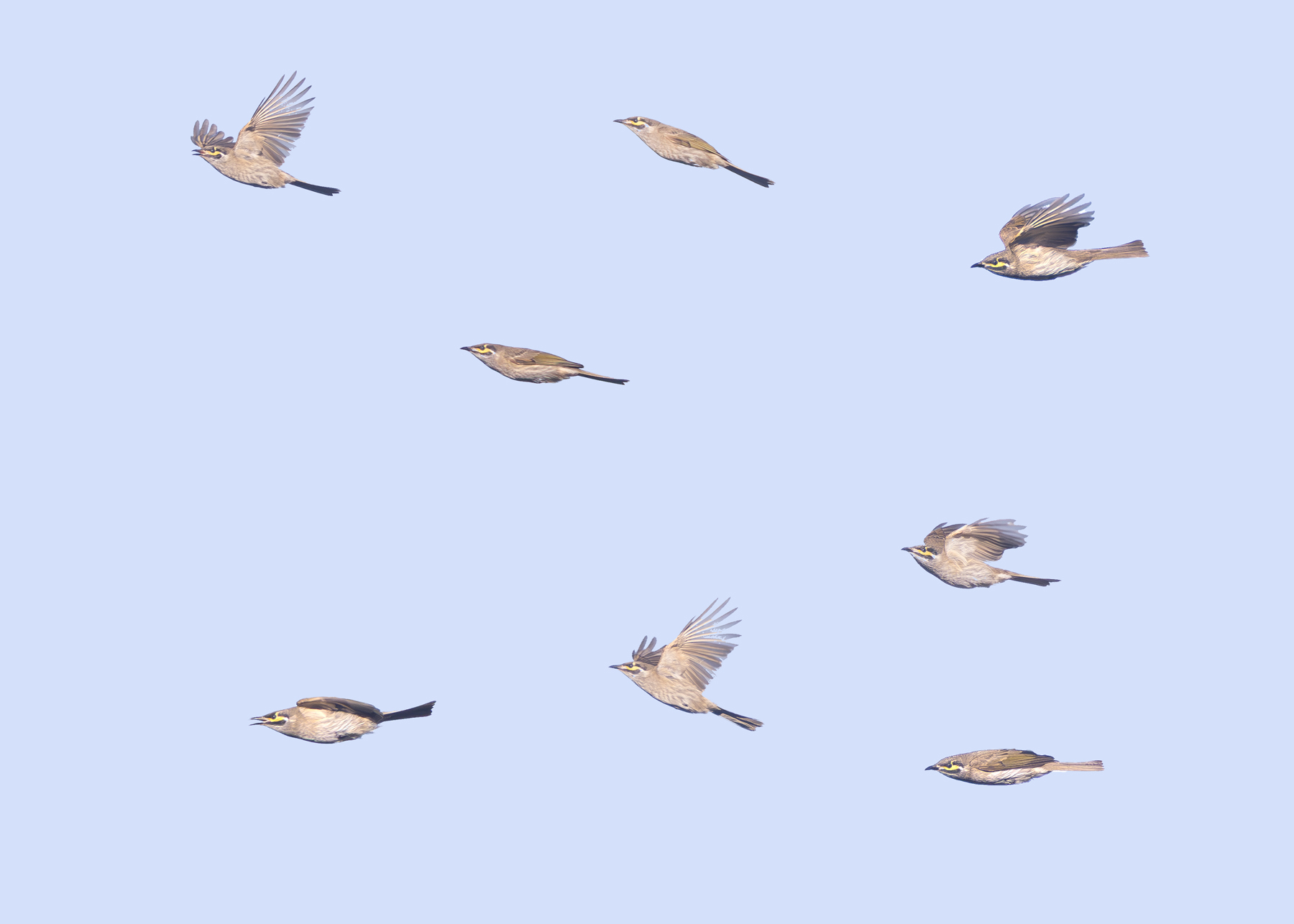
Many species of Honeyeaters including Yellow-faced Honeyeaters and White-naped Honeyeaters migrate north to northern NSW/Southern QLD in what is known as ‘The Great Honeyeater Migration’. During this migration large flocks can be seen swiftly flying over regions including Canberra and Sydney. Once there, the Honeyeaters utilise the food sources of inland Great Dividing Range box-iron woodlands or coastal banksias.
Inflight poses of Yellow-faced Honeyeaters during the 2025 autumn migration from the ranges to the coast - Colin Driscoll.
Altitudinal migration
Many Australian bird populations choose to remain where they are latitudinally and instead migrate from high mountain tops to lower elevations in the cooler climes of autumn including some populations of Rufous Fantails and other species listed below.
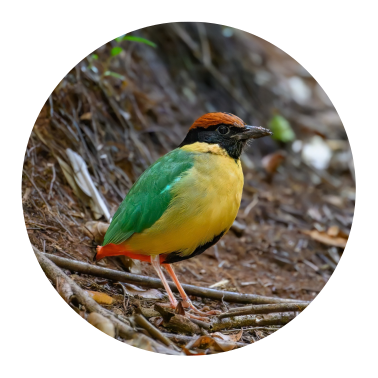
Noisy Pittas- these rainforest dwellers tend to move from higher altitudes to the coastal lowlands.
Noisy Pitta sighted in autumn, 2023, Queensland - Mark Lethlean.
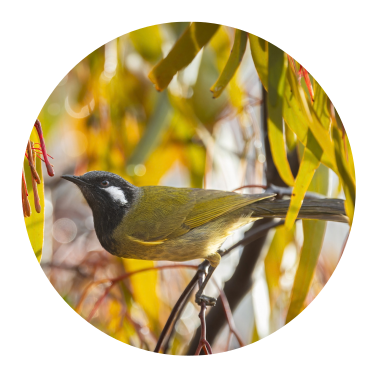
White-eared Honeyeaters – birds of the high country of South-east Australia, these birds typically migrate to under 1100m altitude in autumn.
White-eared Honeyeater eating mistletoe in Myall Park Botanic Gardens, autumn, 2023 - Andrew Rock.
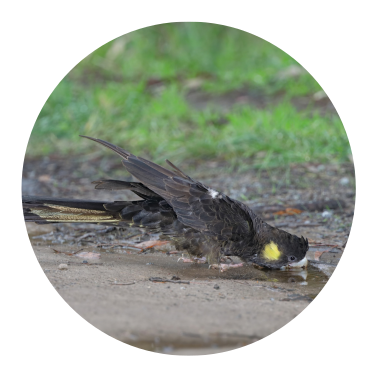
Yellow-tailed Black-Cockatoos - migrate from the Great Dividing Range mountain tops down to lower elevations often flying in large flocks of up to several hundred. And as lots of lowlands are urban or agricultural, they are often spotted across these more disturbed landscapes.
Yellow-tailed Black-Cockatoo drinking from the side of a road in Wantirna South, Victoria, autumn 2020 - Stephen Garth.
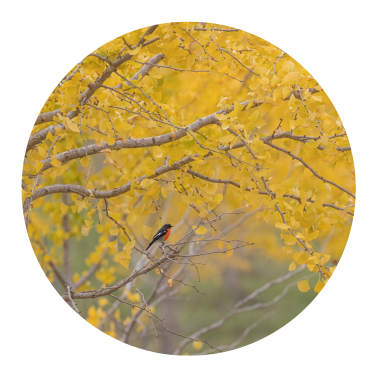
Flame Robins – after spending much of their spring and summer in breeding grounds of the high altitudes of the South-east Australia alpine region, Flame Robins migrate into the southeast lowlands in autumn.
Flame Robin amongst the yellow leaves of an autumn tree in National Arboretum, Canberra, autumn, 2024 - Reeni Mart.
From wet to dry
Carnaby's Black-Cockatoo
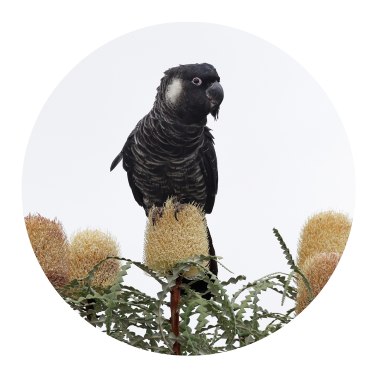
Carnaby’s Black-Cockatoos migrate from the dry WA wheatbelt where they have spent the breeding season to the moist coastal plains with banksia dominated woodlands or pine plantations.
Carnaby's Black-Cockatoo foraging on Banksias in Esperance, Western Australia, autumn, 2023 - Tim Van Leeuwen.
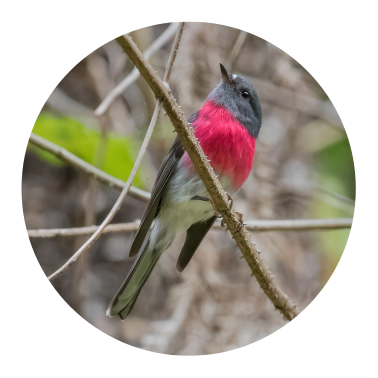
Rose Robins
Rose Robins spend much of their summer in wet rainforests and sclerophyll forests then move into drier, open territory during autumn
Rose Robin in spotted in more open territory, autumn, 2023, Kenilworth, Queensland - John Eley.
Flocking inland
Fairy Martins
Fairy Martins typically leave South Australia and migrate in large flocks to inland and northern Australia.
Pelican flocks at Lake Eyre, autumn, 2024 – Glenn Pure.
Migratory shorebirds
Before their northern migrations, many migratory shorebirds use inland habitats which are dictated by summer and autumn rainfall. The Lake Eyre Basin is one such example that flood millions of hectares during autumn and attract peak bird counts.
Pelican flocks at Lake Eyre, autumn, 2024 – Glenn Pure.
Environmental Conditions
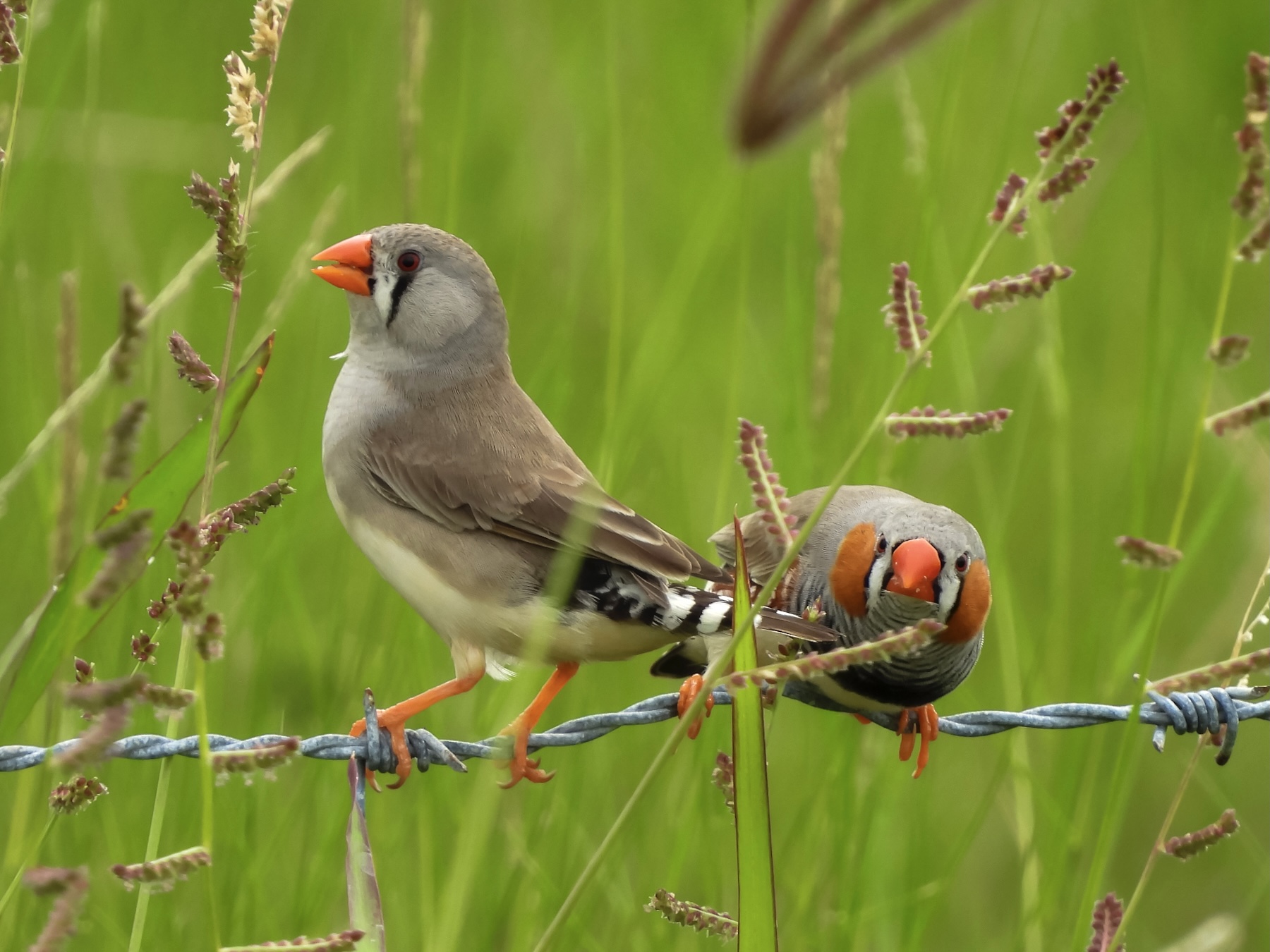
Not all species respond to seasonal change, some respond more to prime environmental conditions, so whilst cooler weather and shorter days may trigger certain activities, specific environmental conditions can dictate exactly when these activities take place. Wind direction can be important to birds that use tailwinds, so large cold fronts or low-pressure systems can incite birds to migrate. In other species such as Zebra Finches, rain is the more pivotal factor. Zebra Finches remain reproductive all year round and instead respond to rainfall. When the rain falls, grass growth and seeds increase which ensure there are adequate food supplies for their young.
Similarly, Red-necked Avocets are opportunistic often breeding in wetlands after they have been filled with flood water from heavy rains. Climate change is now an influencing factor with many migratory birds arriving or departing at different times due to changes in local temperatures. For example, some long-distance Australian migrants have been found to arrive on average, 6.8 days earlier to their non-breeding grounds in Australia.
Zebra Finches perching on a fence to reach the grass seedheads in the rain, Jan, 2026, Townsville, Queensland - Audrey Hay.
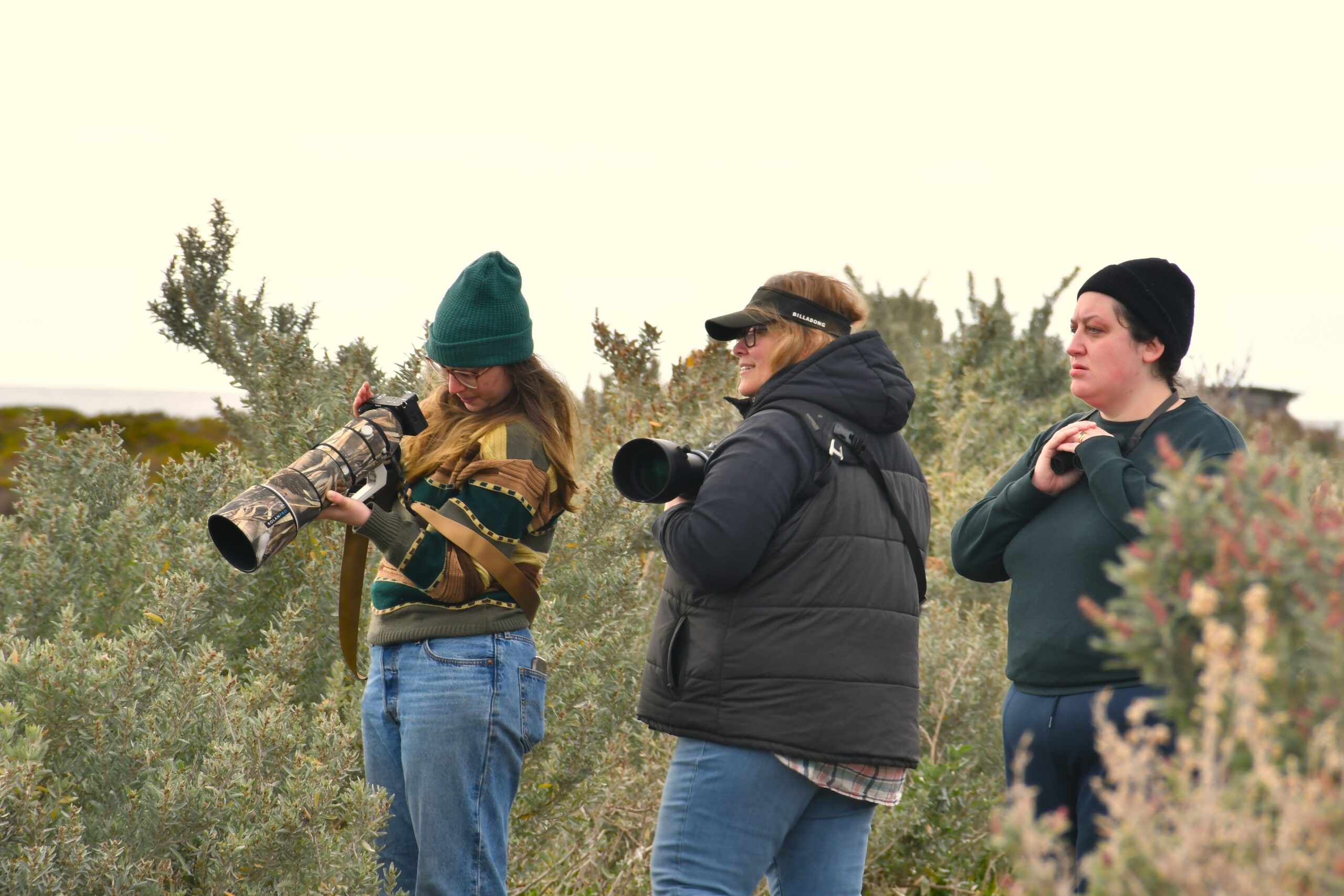
Port Phillip Volunteers - Ryan Kilgower.
Ready to contribute to our understanding of birds? Get your binoculars out this autumn!
Understanding these movements and activities is complex, with so much diversity across Australia. High quality data plays an integral role in our understanding of how our birds are faring and detecting what changes they are undergoing. This empowers us to determine conservation, management, and necessary support. Your input into Birdata continues to contribute to this and BirdLife Australia could not continue our work without it. Autumn is a wonderful time to be out in nature with cooler temperatures and lots of bird activity to observe, so why not grab your binoculars, your local bird guide, a pal, and log the birds (and their behaviour) you see.
Want to log a bird survey in Birdata?
Learn more about how to log a bird survey in Birdata by enrolling in our free Birdata Basics and Beyond online course. Alternatively, check out our free downloadable resources here.